Concordances-a description of the direct relationshp between classification systems - North American Industry Classification System (NAICS) - US Census Bureau.
This article relies too much on to. Please improve this by adding. (May 2014) () The Standard Industrial Classification SIC is a system for classifying by a four-digit code. Established in the in 1937, it is used by government agencies to classify industry areas. The SIC system is also used by agencies in other countries, e.g., by the 's.
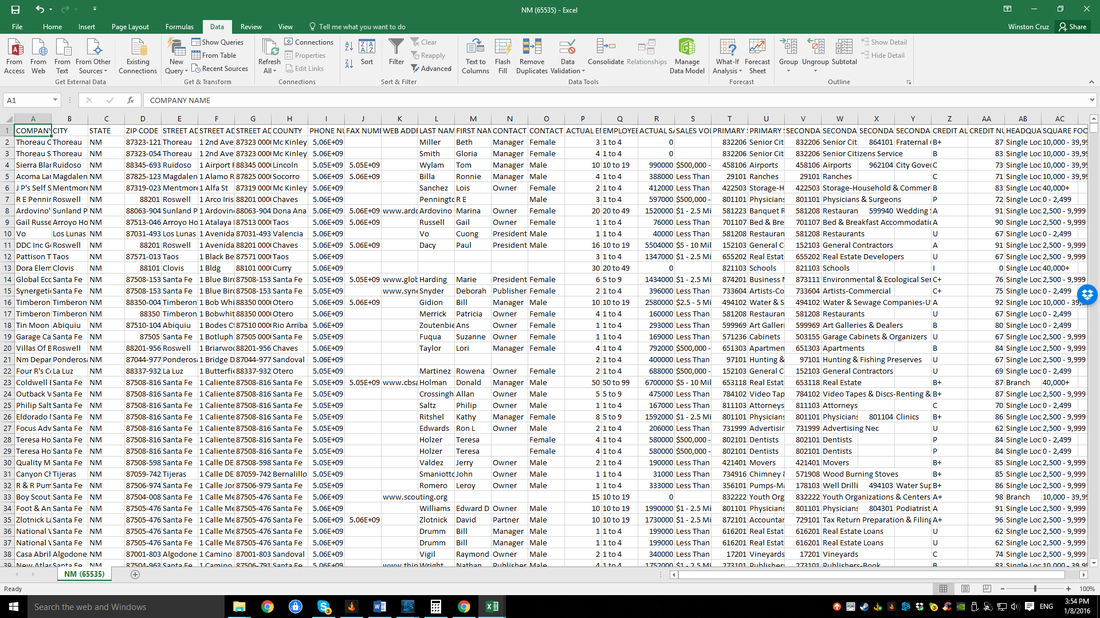
7, Since 1996, JaxWorks has offered a suite of Free Excel workbooks and spreadsheets, and associated MS Word, PDF and HTML documents, that cover a number. 44, 1442, SAND & GRAVEL - CONSTRUCTION, 100.00, 35.00, 27.00, 8.00, 1.50, 6.40, 10.00, 15.10, 6.60, 3.10, 54.30, 10.90, 8.50, 17.20, 23.10, 3.60, 47.60. 1, SIC 2 Digit Code. 3, Code Value, Description. 4, 01, Agricultural Production - Crops. 5, 02, Agricultural Production - Livestock and Animal Specialties. 6, 07, Agricultural Services. 13, 15, Construction - General Contractors & Operative Builders. 14, 16, Heamy Construction, Except Building Construction, Contractor. The United Kingdom Standard Industrial Classification of Economic Activities (SIC) is used to classify business establishments and other standard units by the type of economic activity in which they are engaged. The new version of these codes (SIC 2007) was adopted by the UK as from 1st January 2008.
In the United States the SIC code is being supplanted by the six-digit (NAICS code), which was released in 1997; however certain government departments and agencies, such as the (SEC), still use the SIC codes. The SIC codes can be grouped into progressively broader industry classifications: industry group, major group, and division.
The first 3 digits of the SIC code indicate the industry group, and the first two digits indicate the major group. Contents • • • • • • • • • Purpose [ ] In the early 1900s, each branch of a United States government agency would conduct business analysis using its own methods and metrics, unknown and meaningless to other branches. In the 1930s, the government needed standardized and meaningful ways in which to measure, analyze and share data across its various agencies. Thus, the Standard Industrial Classification system was born. SIC codes are four-digit numerical representations of major businesses and industries. SIC codes are assigned based on common characteristics shared in the products, services, production and delivery system of a business.
Structure [ ] SIC codes have a hierarchical, top-down structure that begins with general characteristics and narrows down to the specifics. The first two digits of the code represent the major industry sector to which a business belongs. The third and fourth digits describe the sub-classification of the business group and specialization, respectively. For example, '36' refers to a business that deals in 'Electronic and Other Equipment.' Adding '7' as a third digit to get '367' indicates that the business operates in 'Electronic, Component and Accessories.'
The fourth digit distinguishes the specific industry sector, so a code of '3672' indicates that the business is concerned with 'Printed Circuit Boards.' Uses [ ] The,, and utilize SIC codes in their reporting, although SIC codes are also used in academic and business sectors. Torrent The Wombats This Modern Glitch. The Bureau of Labor Statistics updates the codes every three years and uses SIC to report on work force, wages and pricing issues. The Social Security Administration assigns SIC codes to businesses based on the descriptions provided by employers under the primary business activity entry on employer ID applications. Limitations [ ] Over the years, the U.S. Census has identified three major limitations to using the SIC system.
The first limitation surrounds its definition and mistaken classification of employee groups. For example, administrative assistants in the automotive industry support all levels of the business, yet the SIC defines these employees as part of the 'Basic Sector' of manufacturing jobs when they should be reported as 'Non-Basic.' Secondly, SIC codes were developed for traditional industries prior to 1970.
Business has changed considerably since then from manufacturing-based to mostly service-based. As a result, and thirdly, the SIC has been slow to recognize new and emerging industries, such as those in the technology sector.
History of the change to NAICS [ ] The, or OMB, was tasked with revising the SIC system to reflect changing economic conditions. The OMB established the in 1992 to develop a new system representative of the current industrial climate.